SC Questions Registry Over Contempt Causelist Deletion
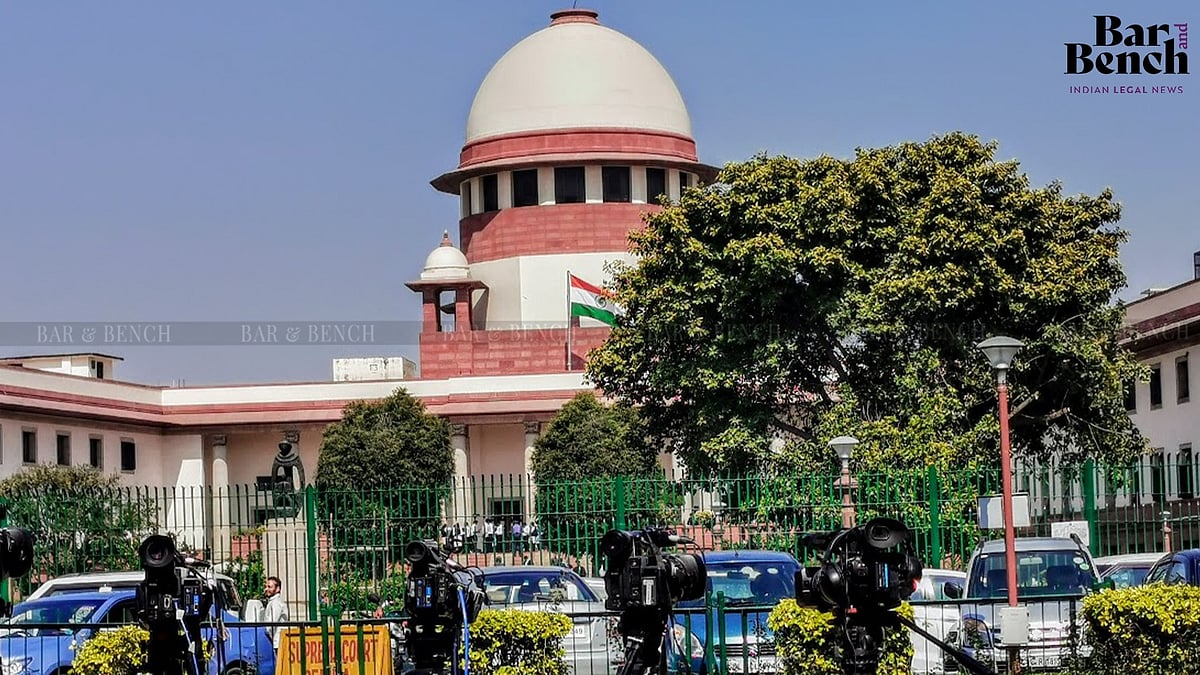
The Supreme Court has directed the registry to explain the abrupt removal of a batch of contempt petitions from the causelist, including a high-profile case on IPS officer deputations.
Latest court orders, judgments, and legal developments from Indian courts — AI-curated and summarized.

The Supreme Court has directed the registry to explain the abrupt removal of a batch of contempt petitions from the causelist, including a high-profile case on IPS officer deputations.

The Delhi High Court held that a magistrate cannot take cognisance of a private complaint under Section 223(1) of the BNSS without first examining the complainant and witnesses on oath and affording the accused an opportunity to be heard.
Courts differ on whether Section 47 trademark cancellation proceedings amount to 'rectification' under Section 124, affecting stay of infringement suits—key for litigation strategy.
In a recent trademark dispute, the Bombay High Court examined the use of 'NEEM' by Jyothy Labs and its implications for trademark protection. While delivering a favorable ruling, the court's reasoning raises questions about essential-feature protection and descriptive trademarks.
The Bombay High Court's ruling in Jyothy Labs v. Dabur raises essential questions on trademark doctrine. The decision highlights the need for clarity in essential-feature protection and passing off.
The Chhattisgarh High Court has upheld a compensation amount of Rs. 37.74 lakh for a motor accident victim, ruling that no tax deduction is applicable when the income falls within the Section 87A rebate threshold.
The Bombay High Court has distinguished between establishing disobedience of injunctions and deciding on the consequences for such disobedience, providing clarity on the application of Order XXXIX Rule 2A.

The Advocates' Association of Western India has made history by reserving the post of president for women, with a rotation every three elections. This pioneering move aims to enhance gender representation in legal leadership roles.
The Bombay High Court, in KVIC v. Jaishukh N. Bhuta, ruled that mere disobedience of an interim injunction does not automatically lead to punishment. The court clarified that Order XXXIX Rule 2A is aimed at ensuring compliance rather than penalizing past non-compliance.
The Calcutta High Court has quashed the classification of a Cash Credit (CC) account as a non-performing asset (NPA), ruling it did not meet the RBI's 90-day overdue criteria. This judgment reinforces the importance of adherence to prescribed guidelines in asset classification.
In KVIC v. Jaishukh N. Bhuta, the Bombay High Court delineated the distinction between finding disobedience of court orders and the ramifications thereof, clarifying the role of Order XXXIX Rule 2A in ensuring compliance rather than punishment.
The Supreme Court reiterated that the 1978 Bangalore Water Supply ruling continues to apply to pending cases under the Industrial Disputes Act.