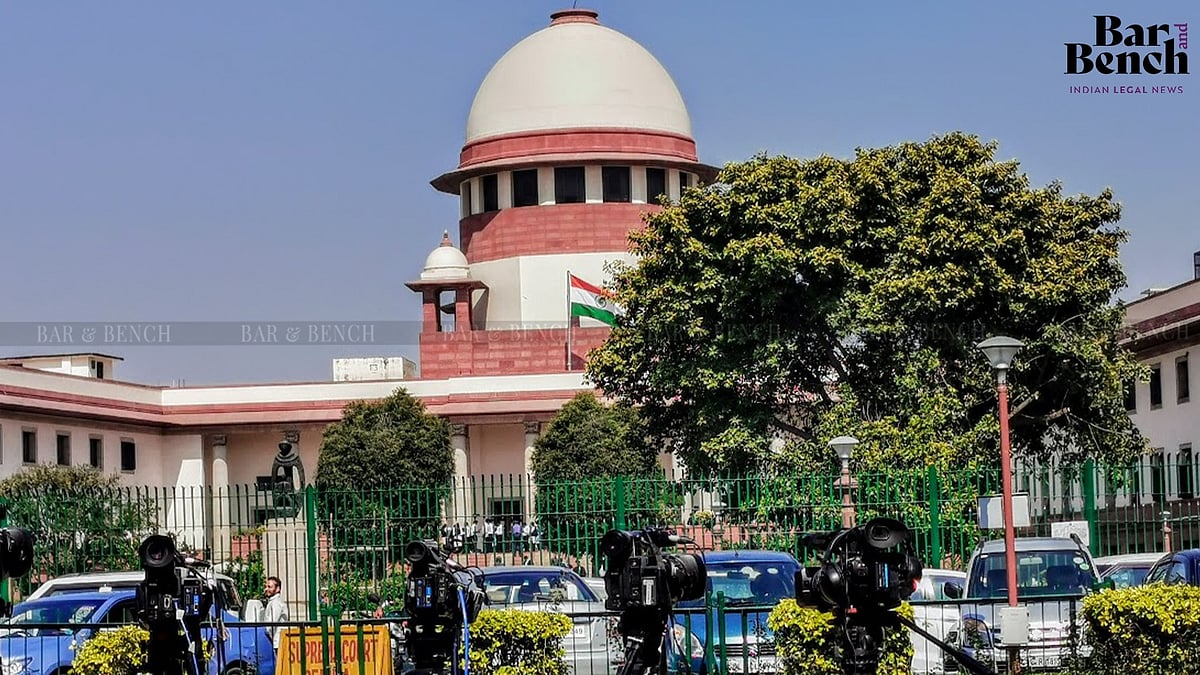
Political Patronage Cannot Ensure Permanent Employment: SC Orders Repatriation
The Supreme Court quashed the politically influenced appointments of four Haryana officers, affirming that illegal appointments cannot be justified by long service.
Latest court orders, judgments, and legal developments from Indian courts — AI-curated and summarized.
The Supreme Court quashed the politically influenced appointments of four Haryana officers, affirming that illegal appointments cannot be justified by long service.
The Supreme Court ruled that High Courts are not permitted to conduct factual trials while quashing FIRs, reinforcing the need for investigations before factual determinations are made.
In a crucial ruling, the Supreme Court clarified that the limitation period under Section 468 of the CrPC begins from the filing of a complaint rather than from the cognizance taken by a magistrate. This overturns a prior Delhi High Court order.
FeaturedThe Allahabad High Court has directed a CBI inquiry into an alleged police encounter where the accused reportedly fired upon the police. The court seeks an independent investigation due to concerns over the incident's legitimacy.
FeaturedThe Madras High Court has quashed a customs order issued after a 14-year delay, ruling that prolonged delays are not authorized under the provisions of the Customs Act.
The Supreme Court has granted bail to an accused under the UAPA Act after noting that prolonged detention and trial delays violated the individual's right to a speedy trial under Article 21 of the Constitution. This ruling reinforces the judiciary's commitment to upholding fundamental rights.
In a notable ruling, the Supreme Court bars punitive measures against students of NALSAR Law University for their dissenting protests. The Chief Justice emphasized that professional enrolment cannot be threatened as a consequence of exercising the right to express dissent.
The Delhi High Court upheld the Income-Tax Department's Look Out Circular (LOC), ruling that courts cannot reassess the executive satisfaction regarding economic interests. The decision reaffirms the executive's discretion in matters impacting India's economic stability.
The Supreme Court condemned the Bar Council of India's order preventing NALSAR students from enrollment, describing it as unwarranted. This came in response to their protests against CJI Surya Kant's presence at their convocation.
FeaturedThe Supreme Court has set aside the Bombay High Court's ruling granting anticipatory bail to Sunil Biyani, emphasizing that relief cannot be provided if anticipatory bail pleas are premature. This decision underscores the importance of solid grounds in such requests under the Central Goods and Services Tax Act.
The Allahabad High Court has awarded ₹25 lakh as constitutional compensation to two adult sisters unlawfully confined by their father following their conversion to Islam. The court found both the father and the state responsible for violating the sisters' rights.
The Supreme Court has directed the formation of Integrated Coordination Groups to address industrial pollution in Rajasthan water bodies, particularly the Jojari River. This decision arises from a suo motu case highlighting significant contamination threats.