ITAT Quashes Reassessment Due to Lack of Due Consideration
The ITAT quashed a reassessment order, citing lack of application of mind in PCIT's approval under Section 151 of the Income Tax Act, highlighting the need for thorough review processes.
AI-curated court updates, legal developments, and practice-area insights for Indian legal professionals.

The ITAT quashed a reassessment order, citing lack of application of mind in PCIT's approval under Section 151 of the Income Tax Act, highlighting the need for thorough review processes.

In a significant ruling, the NCLT admitted a CIRP petition valued at ₹38.28 crore, asserting that SARFAESI proceedings do not restrain corporate debtors from defaulting under the IBC framework.

The Insolvency and Bankruptcy Board of India (IBBI) has suspended an insolvency professional for two years due to the lack of consultation with the Stakeholders Consultation Committee (SCC) and for non-compliance with regulatory oversight during a significant sale involving ₹507.2 crore.

The NCLAT affirmed the initiation of Corporate Insolvency Resolution Process (CIRP) as the agreement to secure payment did not support claims of a genuine pre-existing dispute regarding supplied goods. This decision signifies the NCLAT's position on prioritizing operational debt repayment.
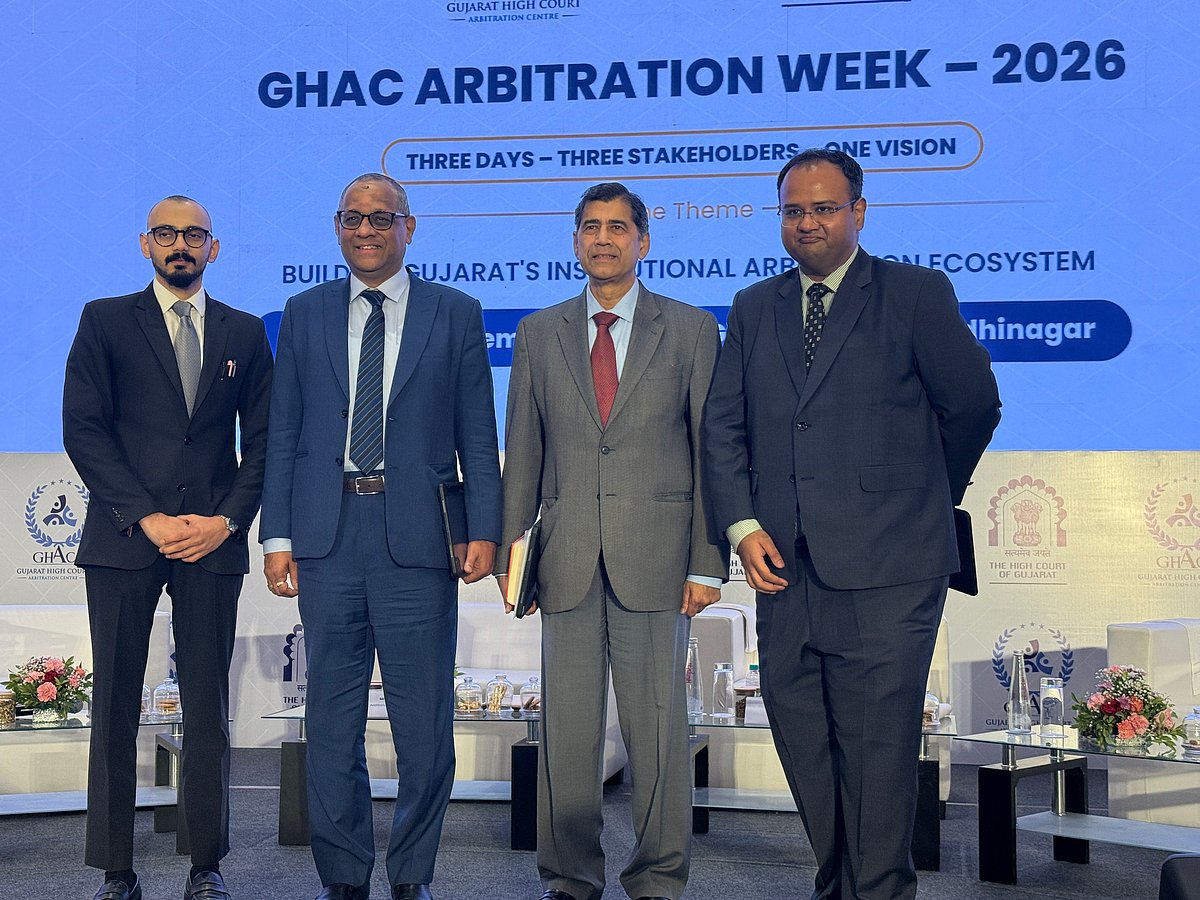
At the Gujarat High Court Arbitration Centre event, ASG N Venkataraman assured that the Central government will not collect taxes that are not due. This reassurance reflects a commitment to protect businesses from abusive practices by tax officials.

The article discusses whether limitation of liability clauses are void under Section 23 of the Indian Contract Act, 1872. It outlines the implications of Sections 73 and 74 regarding secondary obligations due to breach of primary obligations in contracts.
The Delhi High Court scrutinizes the automated copyright take-down processes employed by social media platforms, raising concerns over free speech implications and copyright enforcement mechanisms.
The Bombay High Court's ruling in Jyothy Labs v. Dabur raises essential questions on trademark doctrine. The decision highlights the need for clarity in essential-feature protection and passing off.
The Madras High Court upheld the deletion of addition under Section 68 related to penny stock gains, emphasizing that mere suspicion does not replace the evidentiary link required to prove price manipulation. This ruling reinforces the necessity for tangible evidence in tax assessments.

The Delhi High Court held that a pre-CIRP Customs demand, not filed before the resolution professional, cannot be enforced after the approval of the resolution plan. This ruling has significant implications for corporate insolvency proceedings.

The Bombay High Court has approved a revival plan for Svadeshi Mills worth ₹1,200 crore, asserting the plan protects workers' dues and satisfies public interest. The ruling is significant for stakeholders involved in corporate restructuring.

The ICAI has reprimanded a Chartered Accountant for conducting three tax audits without a valid certificate of practice and imposed a fine of ₹50,000. This ruling emphasizes the necessity for compliance with certification regulations under the CA Act.
The Madras High Court has quashed a customs duty and penalty demand of ₹4.56 crore against a clearance facilitator, citing insufficient evidence of knowledge regarding concealed goods. This ruling reinforces the standards for liability in customs breaches.