Supreme Court of India & Various High Courtscriminalconstitutional
Weekly Round-Up of Supreme Court & High Court Cases
A summary of key cases reported in the Supreme Court and High Courts from May 09, 2026, to May 15, 2026.
May 18, 2026Read more →
AI-curated court updates, legal developments, and practice-area insights for Indian legal professionals.
A summary of key cases reported in the Supreme Court and High Courts from May 09, 2026, to May 15, 2026.

The Calcutta High Court ruled that a motor vehicle tax demand is void unless the inter-state permit secured a valid counter-signature, reinforcing tax obligations tied to proper permitting.
The Gauhati High Court has permitted the impleadment of the CBIC Chairman and Customs Commissioners as necessary parties in a writ petition, emphasizing their essential role in the proceedings.

This weekly round-up provides an analytical summary of significant cases reported from the Supreme Court and High Courts in India, covering various legal issues.
The Income Tax Appellate Tribunal (ITAT) has issued critical rulings from 9 to 16 May 2026, including significant interpretations of tax provisions. Key takeaways include rulings on depreciation of goodwill and the application of Section 45(5A).

The ITAT Delhi ruled that State Electricity Board (SEB) rates represent the appropriate benchmark for captive power transfers, overruling IEX rates.
The Income Tax Department has made available the Excel utilities for filing ITR-1 and ITR-4 for the assessment year 2026-27, facilitating taxpayer compliance.

CESTAT ruled that Bluetooth wireless earphones should be classified under heading 8518 for audio devices rather than as data transmission machines, reaffirming their primary function.
CESTAT Ahmedabad ruled that a partnership firm penalized under customs law cannot have a separate penalty imposed on its partners for the same violation unless specifically provided by statutes.
The Calcutta High Court has allowed the withdrawal of appeals and granted condonation of limitation under the Limitation Act for filing before the Sales Tax Appellate Authority, ensuring compliance with relevant statutory conditions.
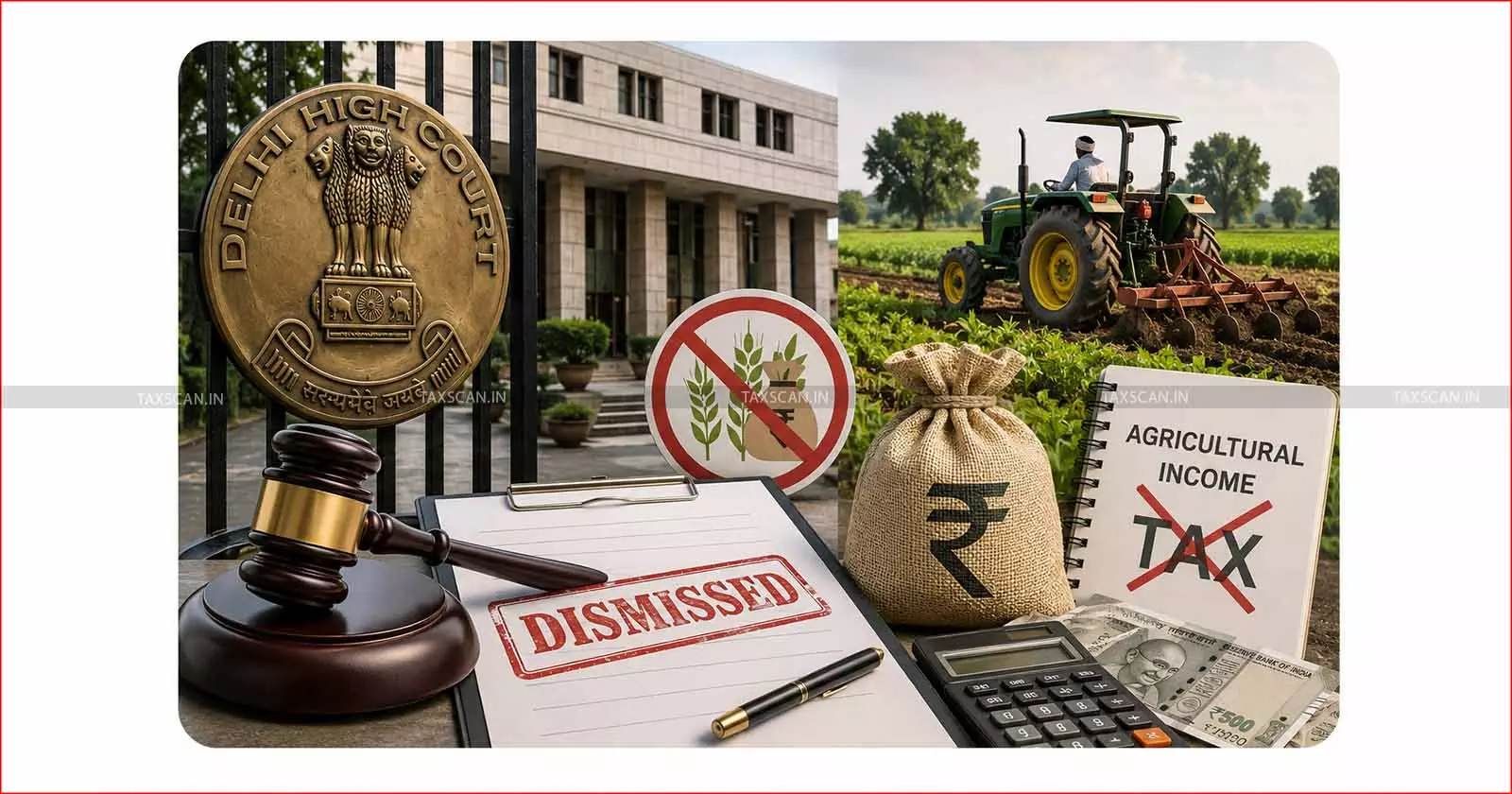
The Delhi High Court has dismissed a Public Interest Litigation (PIL) that sought to impose a tax on agricultural income in the national capital, deeming the plea 'highly misconceived'. This reinforces the precedent that agricultural income remains exempt from taxation.
The ITAT Surat ruled that the bank transactions in question reflected a cheque discounting business and could not be treated as unexplained cash credits under Section 68. Only the estimated commission income was retained for taxation.

The Indian government has increased customs duty on gold and silver to 5%, platinum to 5.4%, and catalysts to 4.35%. This change is part of ongoing amendments to the customs duty framework relevant to precious metals.